
Lifestyle & Shopping
Making Better Purchasing Decisions When Shopping Online
Online shopping removes the chance to pick something up and inspect it. Canadian government and consumer-agency guidance suggests a routine that puts the checking back.

Lifestyle & Shopping Comparison
Power banks, bottles, organisers and pouches all promise an easier trip. Here is how to weigh what each one solves, what it adds to your bag and which airport rules apply.
By Save Framework4 min read
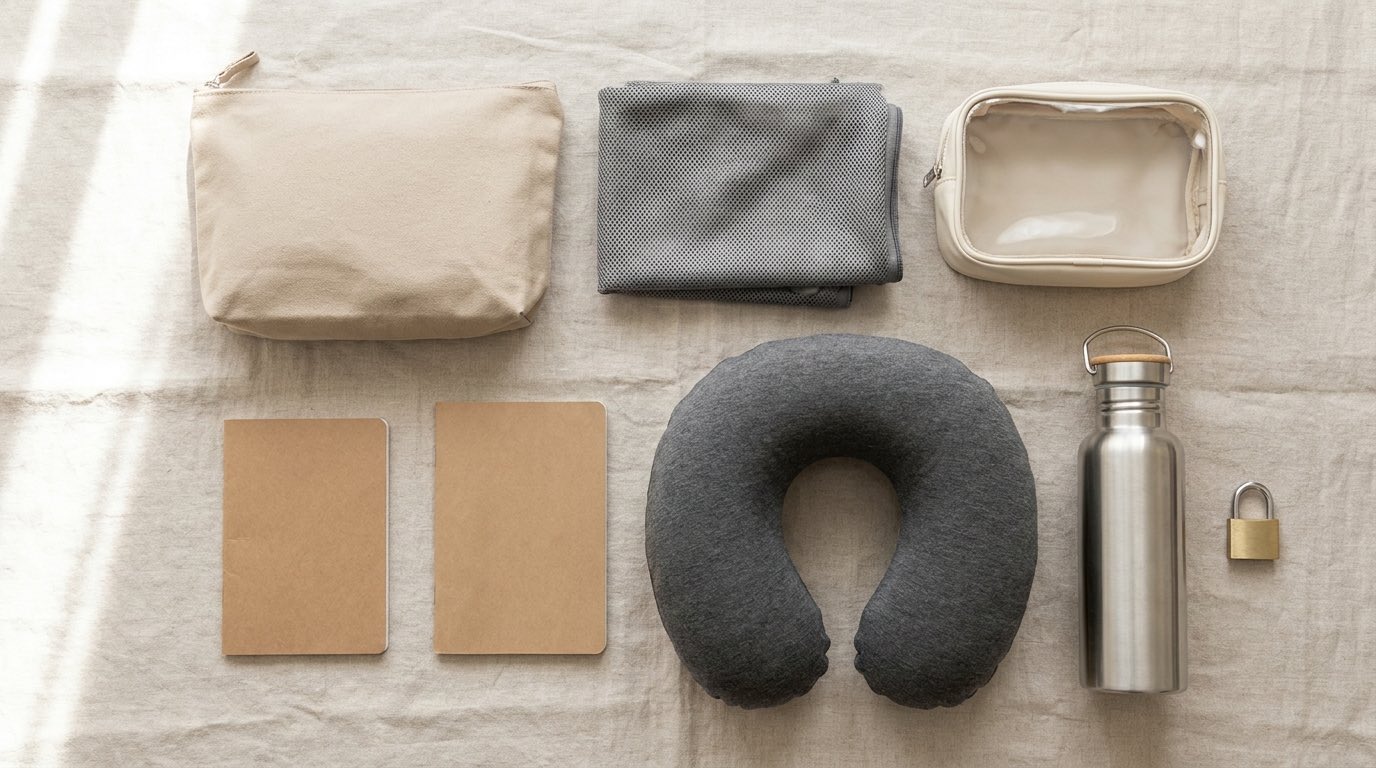
Suppose a weekend trip ended with a phone at two per cent, a shirt buried under chargers and a shampoo bottle leaking through a toiletry bag. Three small problems, three different accessories, and none of them requires the most expensive version on the shelf. Comparing travel accessories works best when you start from the problem rather than the product.
Travel gear is easy to over-buy because every item looks sensible in isolation. A short, honest list helps: what slowed you down, what you could not find, what you ended up borrowing. If the answer is “nothing”, you may not need to buy anything.
Then check what you already own. A zip-top bag, a spare pouch or a reusable bottle often does the job of a dedicated accessory. Buy only when the existing option has clearly failed, and note what you would want improved, whether that is size, weight, closure or how easily it cleans.
A power bank is the accessory most affected by regulations. CATSA, Canada's air transport screening authority, says spare batteries and power banks belong in your carry-on, not in checked baggage, and that damaged or recalled batteries must not be brought on board.
Capacity matters. CATSA's table treats spare batteries rated up to 100 watt-hours (Wh) as allowed in carry-on baggage, while spares from 101 to 160 Wh are limited to two per person and need airline approval. Anything above 160 Wh is not allowed in the cabin. If the label shows only milliamp-hours, CATSA gives the formula: watt-hours equal volts multiplied by amp-hours, so divide mAh by 1,000 first. A 12 V, 8 Ah battery works out to 96 Wh.
Two practical points follow. CATSA notes that many airlines prohibit charging devices on board, so charge before you leave. It also advises keeping spare batteries away from coins and keys and protecting the terminals, for example with tape or a pouch. Airline rules can be stricter than the national guidance, so read your carrier's page before packing.
For carry-on baggage, CATSA requires liquids, gels and similar items in containers of 100 ml or 100 g or less, with every container fitting inside one clear, resealable bag of no more than 1 L. That is why small refillable bottles and flat pouches are popular. The practical trade-off is hardness: a rigid bottle is easier to fill and clean, while a soft pouch packs flatter but can be fiddly to refill.
Two exceptions are worth knowing. CATSA lets prescription medicines and essential non-prescription medicines exceed 100 ml, but you must declare them to the screening officer. And a personal water bottle must be emptied before the checkpoint if it holds more than 100 ml; you can refill it afterwards. An empty bottle, then, is the easier carry.
| Accessory | Solves | Trade-off to weigh |
|---|---|---|
| Power bank | A flat phone or earbuds away from a socket | Adds weight; carry-on only; watt-hour rating and airline rules apply |
| Refillable small bottles | Taking a favourite product within the 100 ml limit | Needs refilling and cleaning; leaks if the closure is poor |
| Packing cubes | Finding things in a bag you open often | Add some weight and can make a half-full bag feel full |
| Toiletry pouch with clear panel | Keeping the liquids bag organised at screening | Another item to pack; size must suit the 1 L bag |
| Cable and adapter organiser | Stopping chargers tangling | Only useful if you actually carry several chargers |
| Reusable empty water bottle | Filling up after security | Must be empty at the checkpoint; bulky when packed |
Notice that the right answer depends on how you travel. Someone taking short flights with a single backpack has little use for a set of cubes; a family packing several people into one suitcase might use them daily.
Canadian businesses are not required to take back items unless they are defective, according to the Office of Consumer Affairs, although many offer refunds or exchanges. Policies often exclude personal items, impose deadlines or restocking fees, and may differ for third-party sellers. The same page suggests holding off opening packaging until you are sure you will keep the item. Read the policy before buying, particularly for something you cannot test until the day you leave.
For more on comparing options before you commit, see How to Compare Products Beyond the Advertised Price, and for a general framework on online purchases, Making Better Purchasing Decisions When Shopping Online.
How this was researched. Based on published information and the sources listed below. Save Framework has not tested the products or services mentioned. See the editorial policy.
Lifestyle & Shopping
Online shopping removes the chance to pick something up and inspect it. Canadian government and consumer-agency guidance suggests a routine that puts the checking back.
Buying Smarter
A product page is a sales document. Six things to look for on it, from seller details to certification marks, before you commit.
Lifestyle & Shopping
A label can tell you what a product is made of, and sometimes how to look after it. Knowing which parts of a label are required in Canada and which are optional helps you judge how long something may last.
Newsletter
Subscribe to the Save Framework newsletter, which contains new articles from the journal. Read more on the newsletter page.